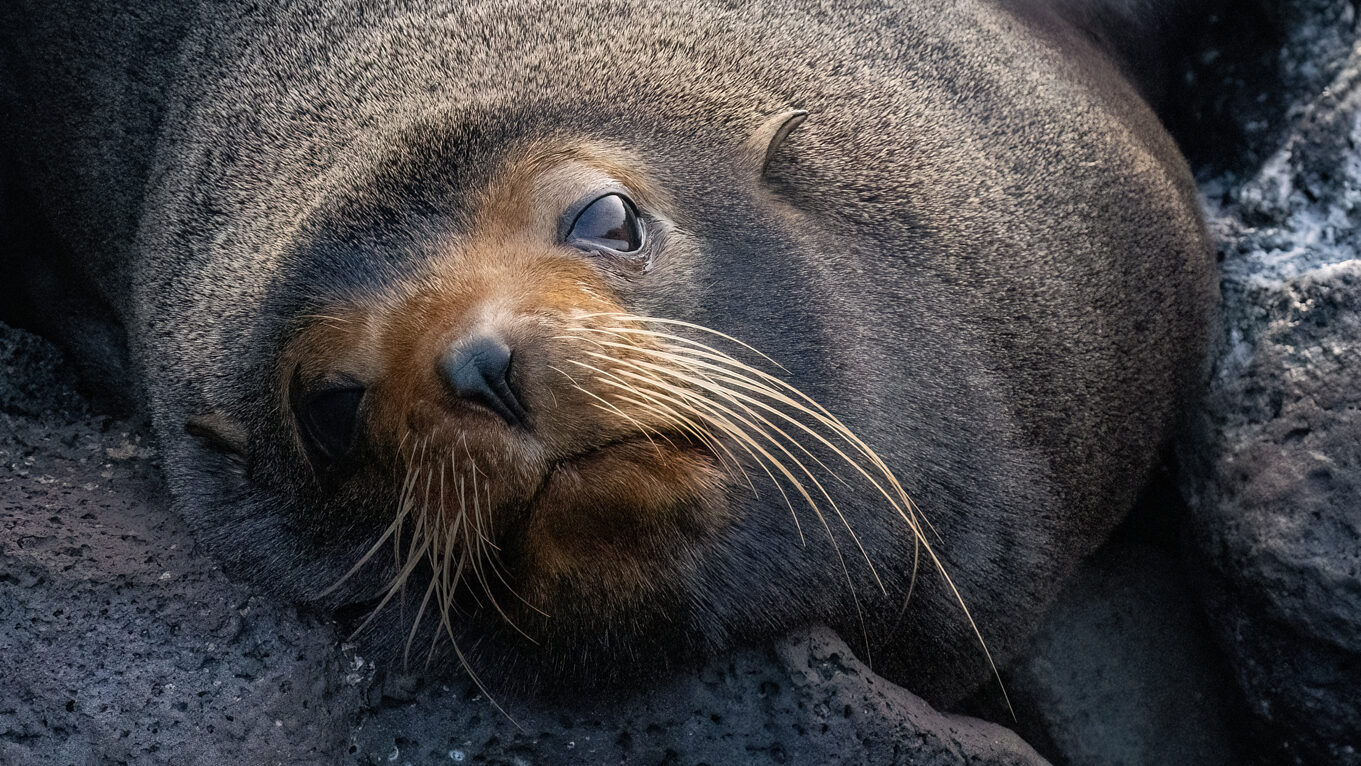
Located on the equator, 600 miles west of mainland Ecuador, are Las Islas Encantadas—the Enchanted Islands. Better known as the Galápagos Archipelago, the Galápagos are a world apart—an untamed sanctuary where wildlife have evolved in isolation, producing species found nowhere else. In the absence of natural predators, animals here are astonishingly fearless, offering rare and intimate photographic opportunities. From volcanic landscapes shaped by fire to brilliant turquoise waters teeming with marine life, every island tells a story of adaptation and survival.
Our adventure begins in Quito, Ecuador, before flying to Baltra and setting sail to the Galápagos Islands. A large population of Magnificent Frigatebirds await us on North Seymour Island. During the breeding season, males inflate their brilliant red throat pouches in an elaborate display to attract mates. As we walk among the nesting sites, we watch Blue-footed Boobies performing their slow-motion courtship dance, lifting their sky-blue feet in exaggerated steps. Along the cliffs, swallow-tailed gulls perch at the edge, while below, sea lions haul themselves onto the rocky shore, joining marine iguanas who blend seamlessly into the dark, weathered stone.
We journey to the otherworldly lava fields of Sullivan Bay, with its billowing lava formations frozen in time from an eruption just two centuries earlier. Nearby Rábida Island glows with its iron-rich red sands and teems with life; Galápagos Hawks soar above and Brown Pelicans nest undisturbed along the shore. These islands, untouched by mainland predators, allow birds and reptiles to thrive in remarkable abundance. Santiago’s Puerto Egas offers striking black sand beaches, while Bartolomé Island boasts one of the most breathtaking views in the Galápagos—Pinnacle Rock rising from the sea. If we’re fortunate, we may witness sea turtles nesting beneath the stars. At Sombrero Chino, Galápagos Penguins dart through crystalline waters, while on Cerro Dragón, we might capture dream-like images of yellow land iguanas blending into a landscape of towering prickly pear cacti. A nearby hypersaline lagoon shimmers pink with red algae and reflections of flamingos wading through its shallows. Then we wander beneath Scalesia, or Giant Daisy Tree forests—a unique ecosystem found only in the Galápagos—as we ascend into the misty highlands of Santa Cruz Island.
The Galápagos is unlike anywhere else on Earth—an open-air museum of evolution, where each island reveals a new chapter in a story millions of years in the making, and where nature unfolds before your lens in vivid, unforgettable detail.
Tour Itinerary
Day 1 Arrive Quito in the afternoon and transfer to our hotel. A group dinner is planned for this evening. (D)
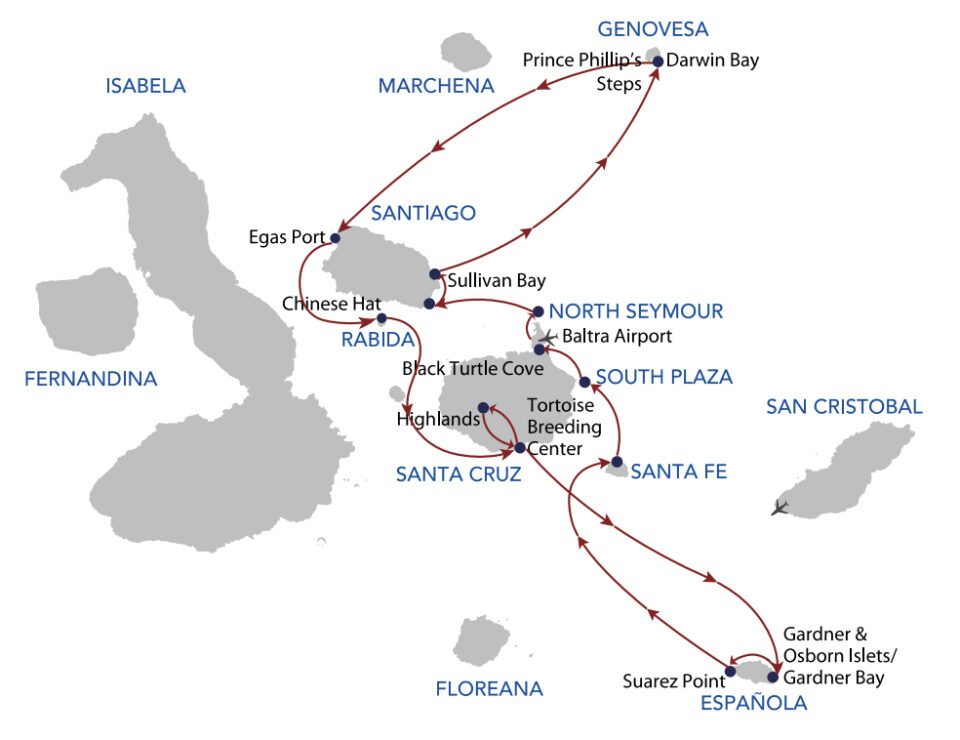
Day 2 We fly to Baltra in the Galápagos, complete national park formalities and set off to sea aboard our comfortable yacht. You will be shown to your cabin where you will have some time to settle in before lunch and a welcome briefing. North Seymour is another uplifted island that is quite flat. The island is home to a large population of magnificent frigatebirds. We should see the frenzied displays of courting males, and the nest-building antics and thievery of their neighbors. In the open areas, blue-footed boobies perform their slow-motion courtship dance, and on the cliff edges elegant swallow-tailed gulls roost and loaf. Despite tremendous crashing surf on the outer shore, sea lions haul out onto the beach here and are joined by marine iguanas. Photography on North Seymour Island, with its low-flat profile and small forest of silvery Palo Santo trees. At this time of year, Magnificent Frigatebirds and Blue-footed Boobies engage in dazzling courtship displays and nest along the trail. Sea lions and marine iguanas share the rocky shoreline, while Swallow-tailed Gulls fly overhead. (BLD)
Day 3 After breakfast, we land on the rugged basalt shoreline of Sombrero Chino. This small islet is named for its distinctive shape. This is an excellent location to observe marine iguanas, Galápagos Penguins and Eagle Rays. The stunning landscape and crashing waves make for an exhilarating morning of landscape photography. We return to the boat for lunch. In the afternoon, we make a dry landing on Cerro Dragón, or Dragon Hill, named for its breeding colony of land iguanas that burrow into the rocky terrain. Here you can photograph the iguanas among the Opuntia cacti, which provide them with both food and moisture during the dry season. We walk to a hypersaline lagoon—saltier than the ocean—where we may spot American Flamingos, Black-necked Stilts, or White-cheeked Pintail Ducks. We might also see several species of endemic Darwin’s finches with their specialized bills, Galápagos Mockingbirds and other native birds. Before returning to the yacht for dinner and our nightly orientation, there will be time for an optional swim or snorkel. In the afternoon, we visit the surreal terrain of Sullivan Bay, where a dramatic eruption left behind a vast expanse of hardened lava. Striking formations of ropy lava and spatter cones comprise a graphic photographer’s dream landscape. We may also find an occasional shy Galápagos Penguin here, the world’s northernmost penguin species. Later in the day we travel to Rábida Island which lies at the center of the Galápagos archipelago. Here clusters of sea lions lounge on the red sand beachs. Brown Pelicans commonly nest at shoulder height in saltbushes along a nearby trail, which leads to a secluded saltwater lagoon. The island is a good location to see Blue-footed Boobies, Galápagos Doves and to search for endemic Galápagos Hawks, some of which may perch directly over our heads. (BLD)
Day 4 Genovesa Island is the summit of a partially submerged volcano and circular caldera which has been breached by the sea. Gentle slopes covered with sprawling Opuntia cacti and silvery palo santo trees rise 200 feet above the rugged shoreline. We go ashore at Darwin Bay to explore a coral-covered beach and tidal lagoons. This is the best spot in the islands to photograph great frigatebirds, yellow-crowned night herons and swallow-tailed gulls, as well as lava gulls. With a total population of just 400 pairs, the sooty-plumaged lava gull is the rarest gull in the world. In the afternoon we climb the spectacular cliffs of El Barranco, also known as Prince Phillip’s Steps, and hike through a path that leads up a high cliff rock face. This site is home to Palo Santo vegetation, and home to Nazca and red-footed boobies, Galápagos doves and mockingbirds. There are at least four kinds of Darwin’s finches and the possibility of finding the endemic race of the elusive short-eared owl. (BLD)
Day 5 Egas on Santiago Island reveals black sand beaches which were the site of a small salt mining industry in the 1960s. A hike in the area should provide an excellent opportunity to see finches, doves and hawks. Along the coast, basking marine iguanas, gaudy orange Sally Lightfoot crabs, and feeding American oystercatchers keep us busy until we reach a colony of Galápagos fur seals resting on the black lava rock at the end of our walk. Snorkeling is good in the waters near our landing beach. Rábida Island lies at the center of the Galápagos Archipelago. The reddish sand beach always has clusters of sea lions lounging and loafing in the surf and brown pelicans commonly nest at shoulder height in saltbushes close by. The island is a good location to search for Galápagos hawks, some of which may perch right over our heads. (BLD)
Day 6 At 490m above sea level, Cerro Mesa provides an impressive view of the archipelago. It is an excellent location to observe numerous endemic plants as well as up to 7 species of finch and the vermillion flycatcher. The area is characterized by a persistent drizzle (‘la garúa’) that falls horizontally throughout 8 months of the year. The west side features the largest crater on Santa Cruz. The Highlands of Santa Cruz are a deep green which contrast beautifully with the dry, lower part of the islands. We explore the lush scalesia forests of the Highlands—the favorite haunt of vermillion flycatchers—investigate volcanic craters and lava tubes and visit a tortoise reserve to photograph these charismatic animals in the wild. (BLD)
Day 7 Española Island is one of our favorite landing sites. The island is virtually the world's sole nesting grounds of 12,000 endemic waved albatrosses. When we arrive, the birds are in the peak of their courtship period. The island is also home to blue-footed boobies, Nazca boobies, swallow-tailed gulls, red-billed tropicbirds, Hood mockingbirds, sea lions, lava lizards and unusual (red) marine iguanas. Punta Suarez is an outstanding site for wildlife but also has a spectacular oceanside blowhole. When heavy swells are running, the spray shoots 30 yards into the air. It's hard to resist the antics of the lounging sea lion pups as they frolic in the shoreline surf, wrestle and play with each other, and pester their mothers at Gardner Bay. All of this is set against a backdrop of turquoise water and azure sky. (BLD)
Day 8 From a picturesque anchorage the land rises quickly to a high, rolling interior of eroded lava on Santa Fe Island. A variety of birds nest here, but of particular interest are Galápagos hawks, Galápagos mockingbirds and Galápagos doves. Here a colony of sea lions provides constant entertainment. A walk inland rewards us with attractive scenery and a cactus forest—and a photo opportunity with the large endemic Santa Fe land iguanas. We snorkel the island’s rocky shallows for their many fish and close underwater views of sea lions and, possibly, sea turtles. The Plaza Islands are flat, gently tilted, lava fault blocks uplifted from beneath the sea. Our visit is particularly interesting because of several hundred land iguanas that live there among the island’s giant cacti. Our landing beach is a whelping area for sea lions, and the steep wind-blown cliffs along the southern coast are one of the best locations in the islands to photograph flying red-billed tropicbirds with their elegant streaming tail feathers. (BLD)
Day 9 Returning to Santa Cruz Island, we visit Black Turtle Cove in the northern part of the island. This inlet is surrounded by mangroves and is only accessible by dinghy. The shallow cove is a haven for young marine life. Black-tip and white-tip reef sharks, sea turtles, and a variety of rays are often spotted here. After this final visit, we will transfer to the Baltra airport for our return to Quito. (BLD)
Day 10 Arrange for flights home at any time. (B)
Please Note Participants should allow for flexibility due to changes in weather, natural history events or other logistical arrangements deemed necessary by our leaders. Final determinations are subject to permits issued by the Galápagos National Park Service.
Galápagos Angel
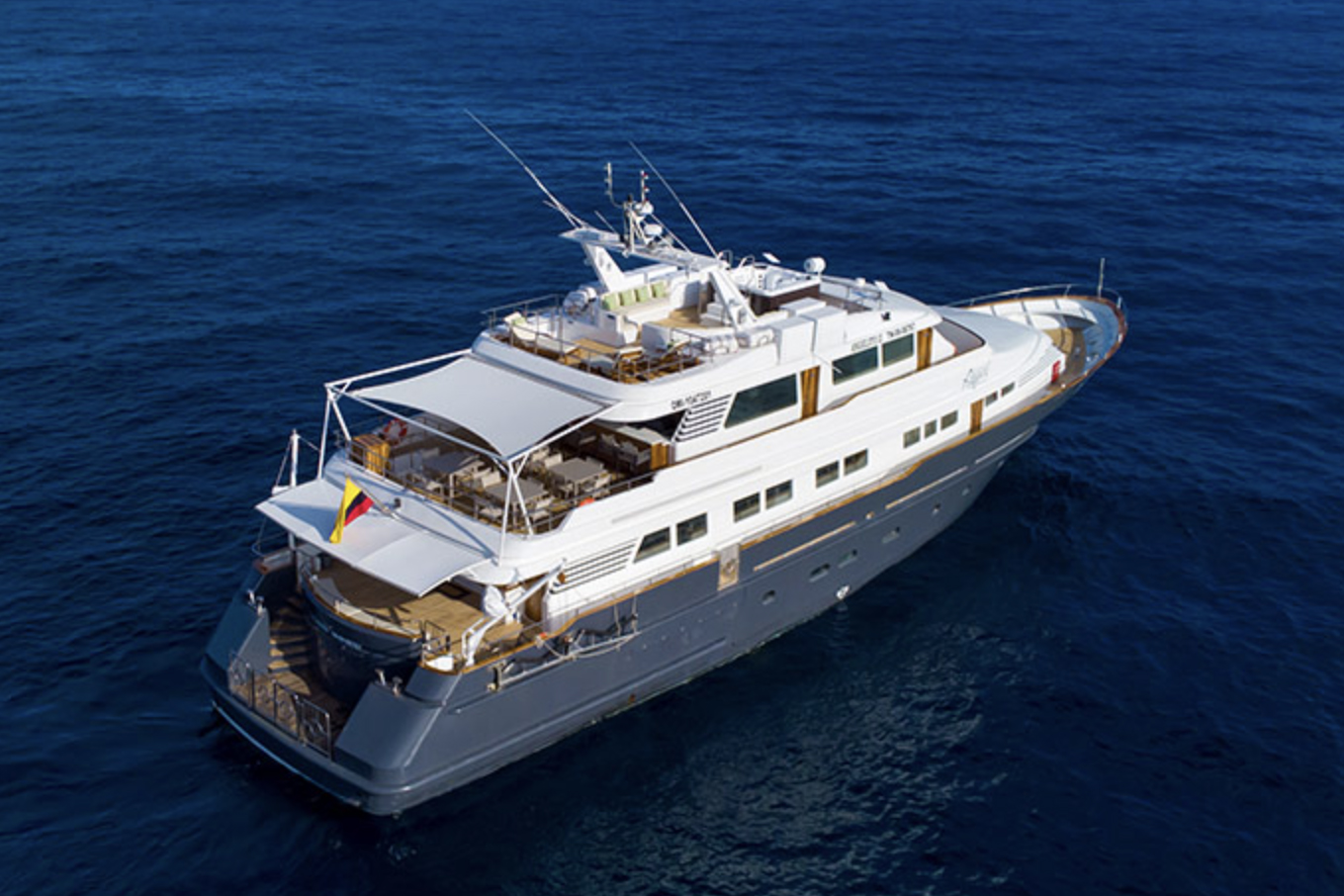
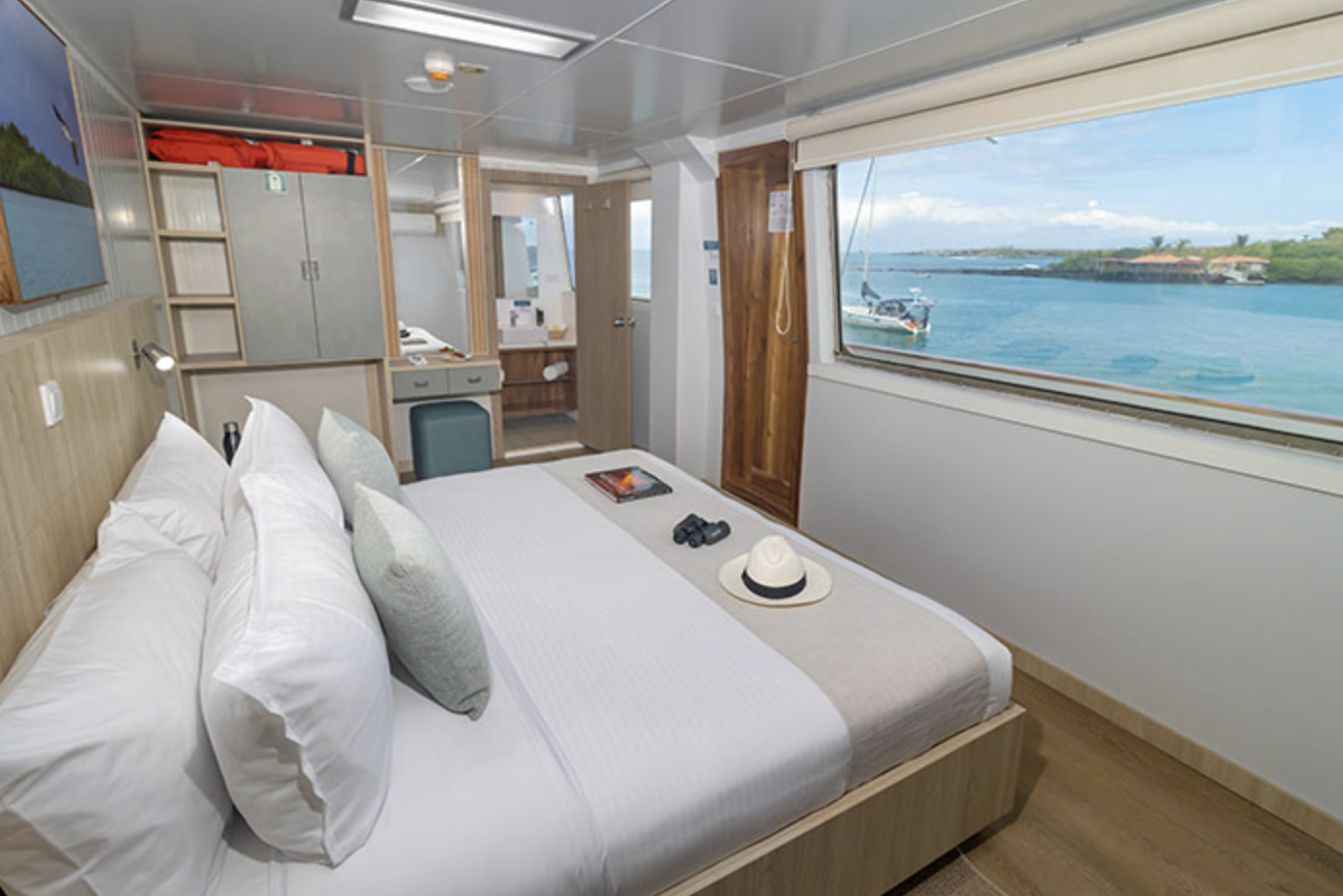
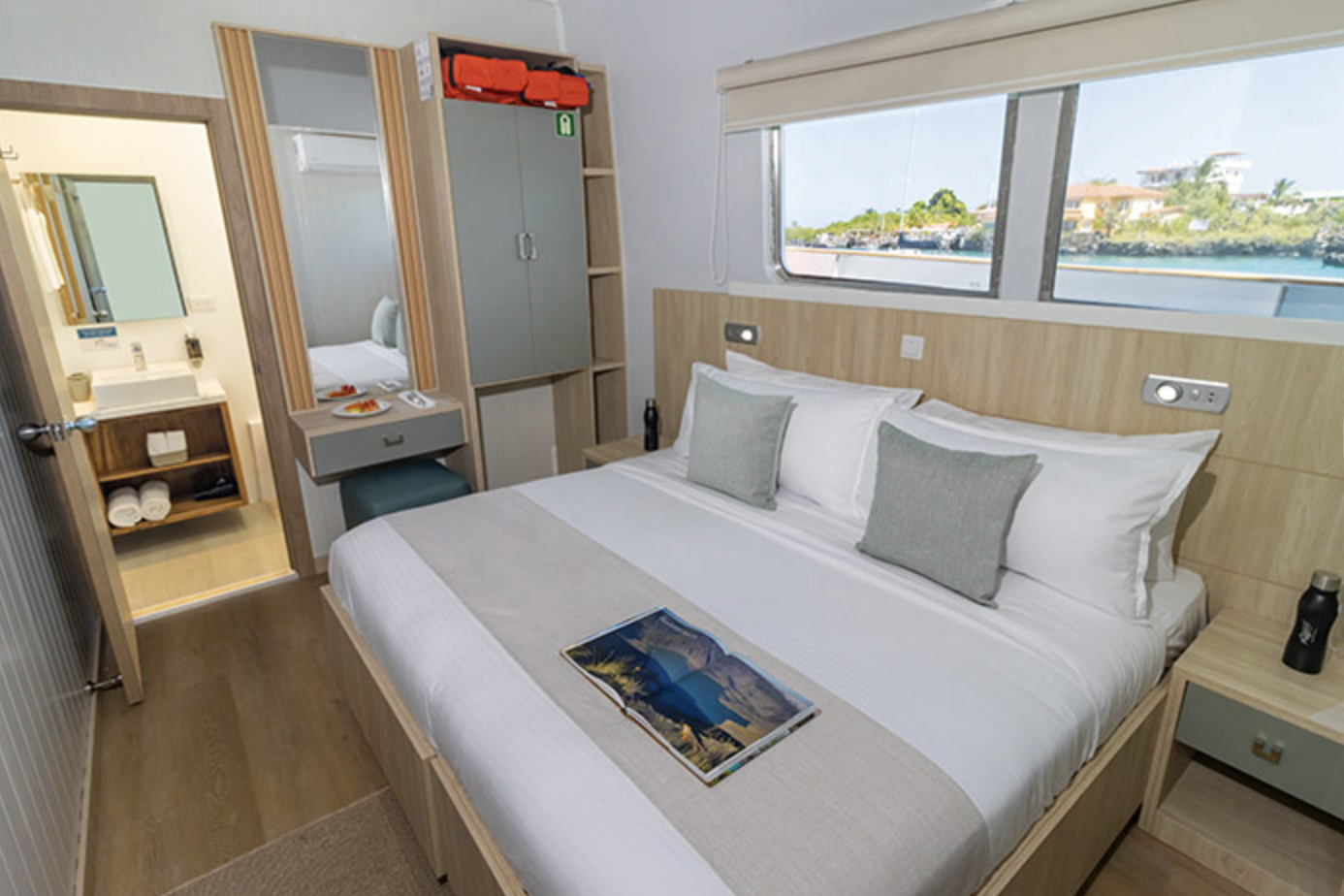
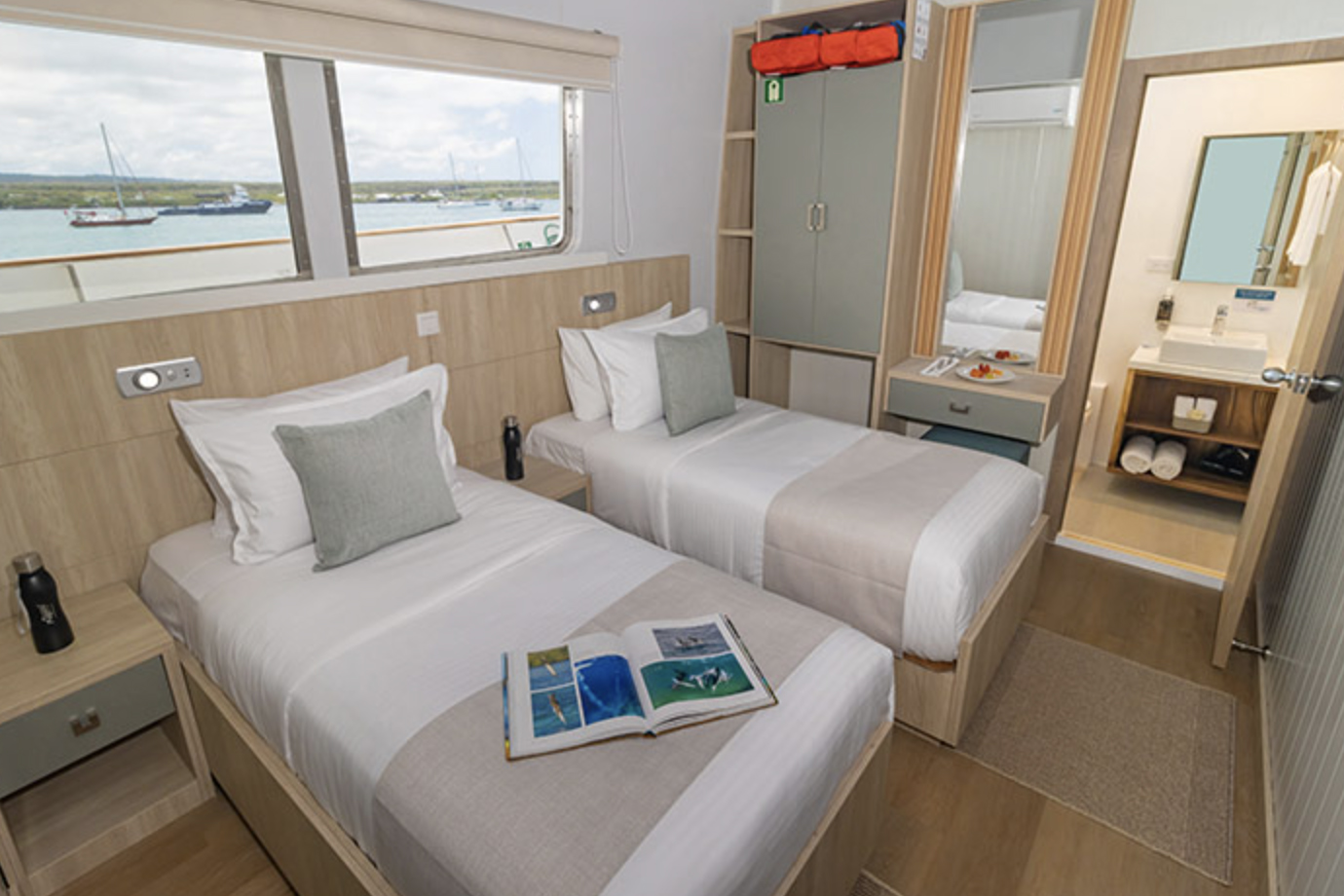
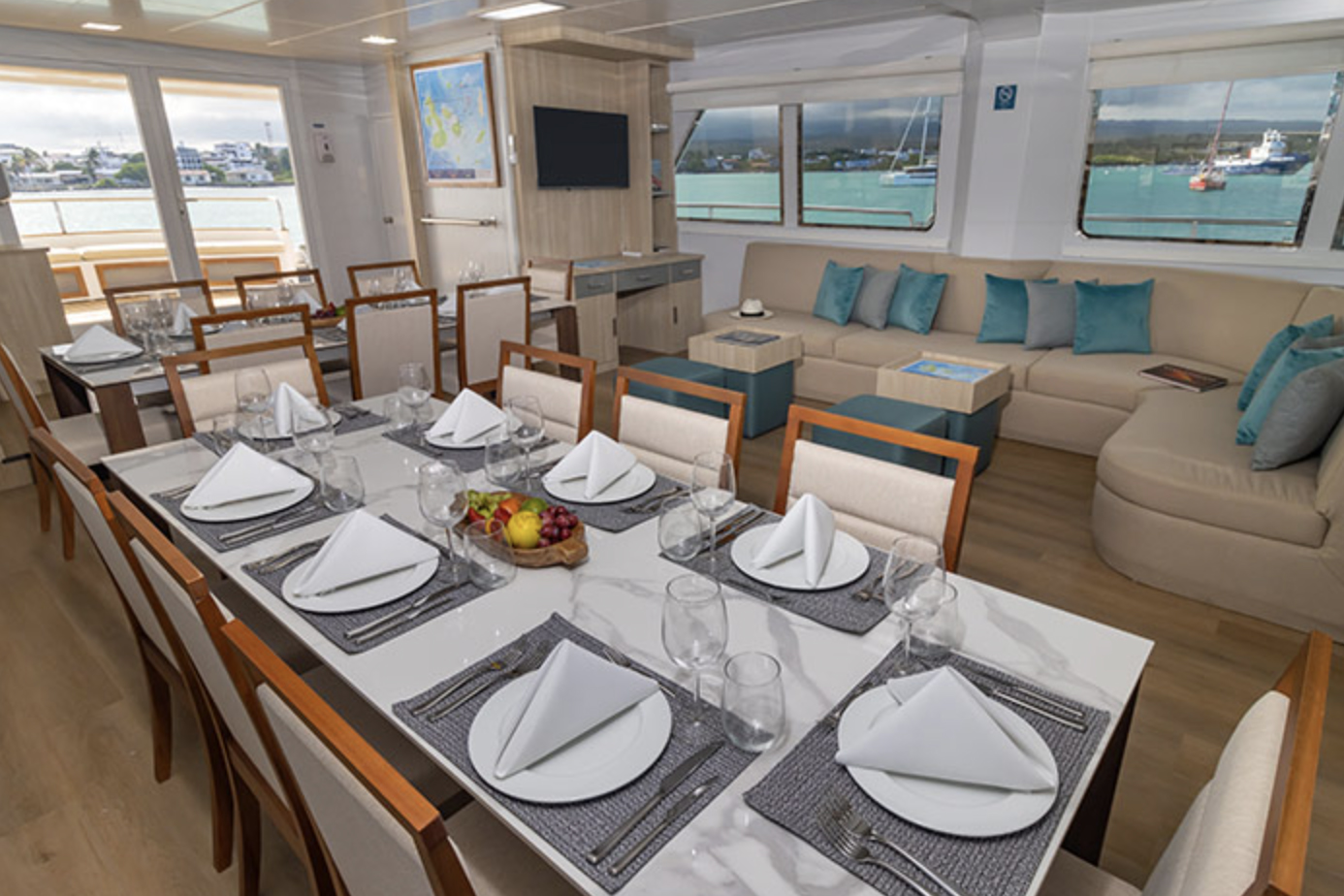
The luxurious 115-foot Galápagos Angel offers the elegance and amenities to make your cruise a comfortable and unforgettable experience. Upper Deck Suite cabins have panoramic windows, king size bed with private bath. Main Deck cabins have twin or single bed options, panoramic windows with expansive ocean views with private bath. All cabins are air-conditioned. The yacht’s spacious cabins are much more akin to cabins on a cruise ship rather than the small cabins with upper and lower berths featured on most vessels operating in the Galápagos.
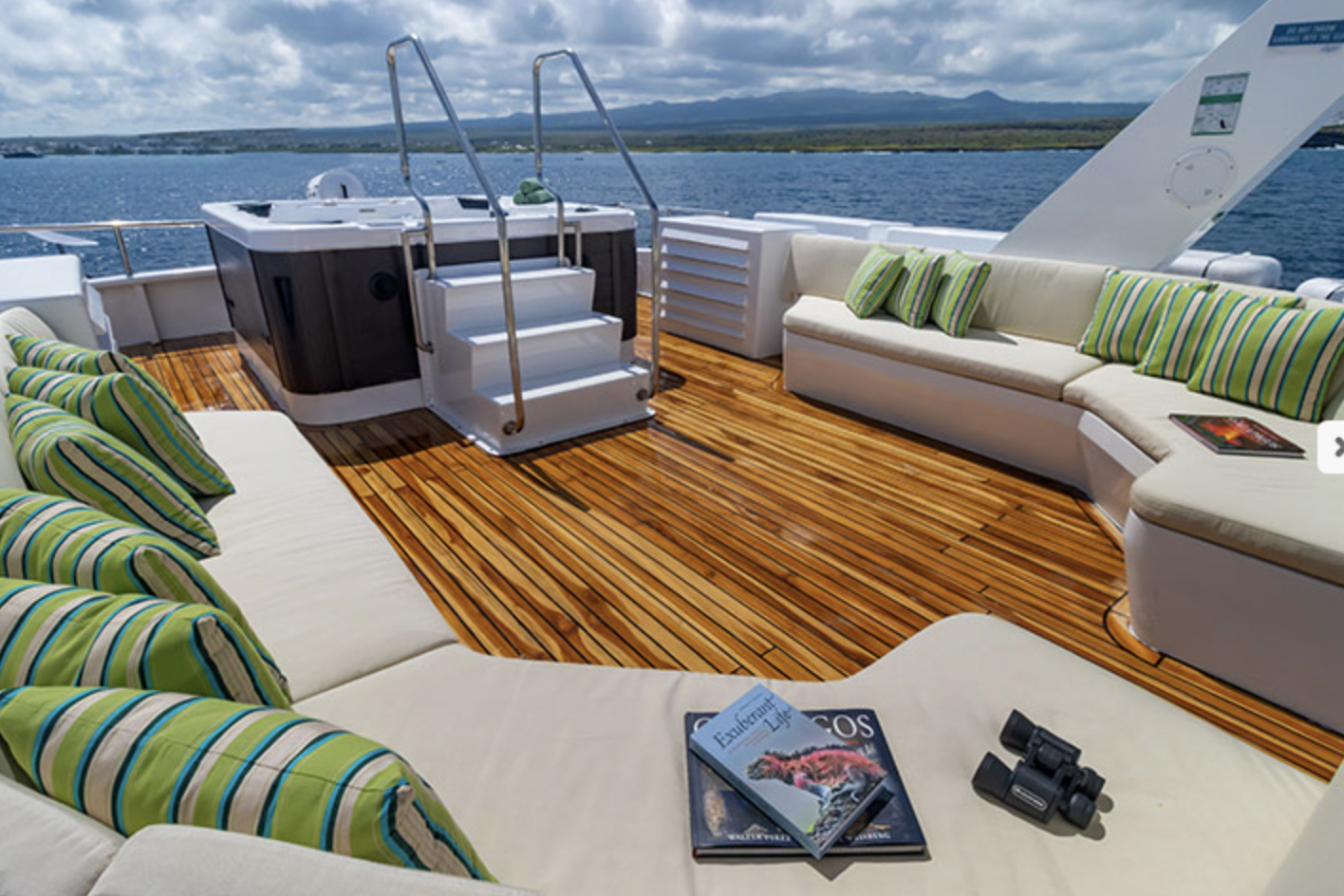
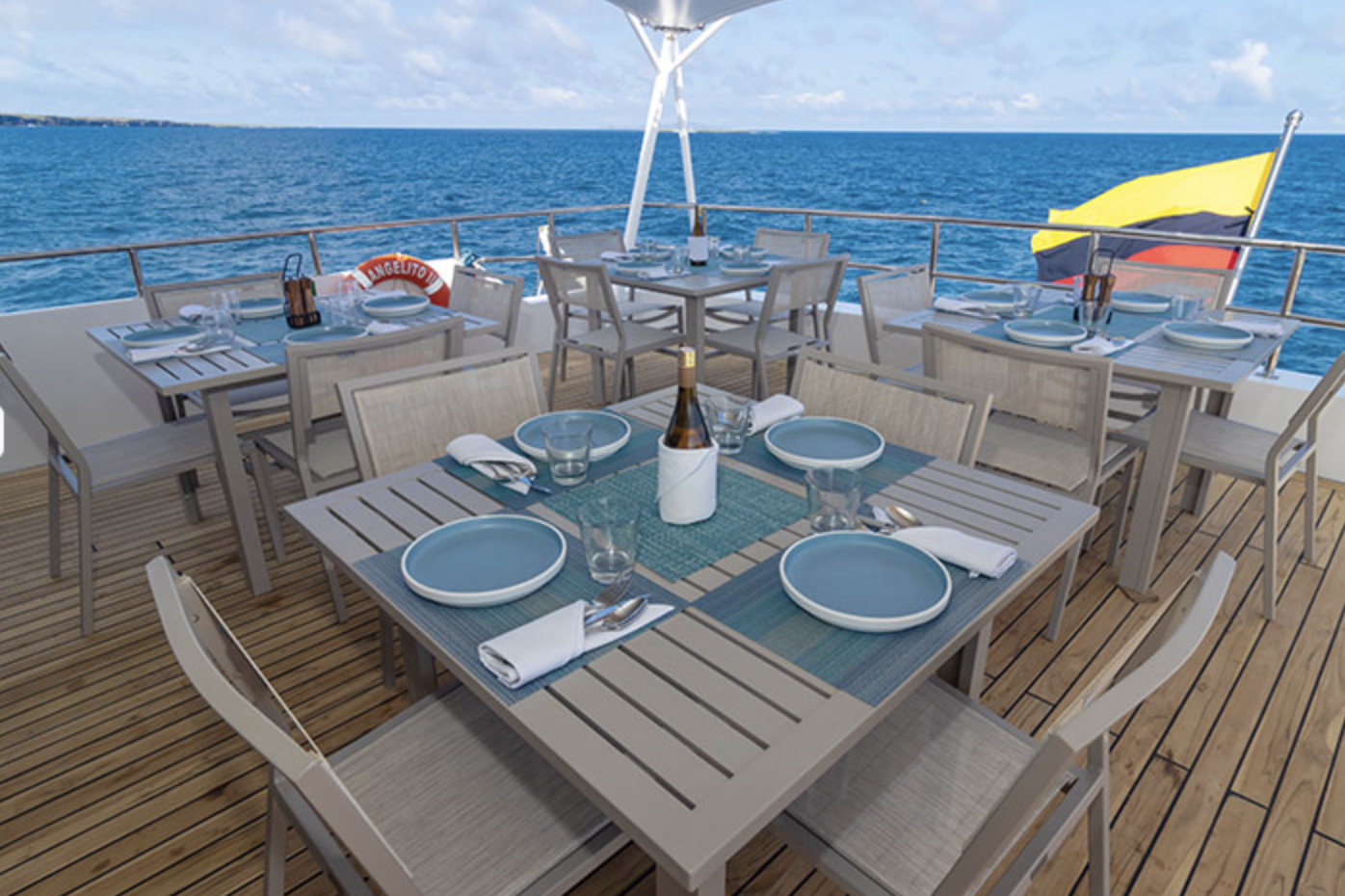
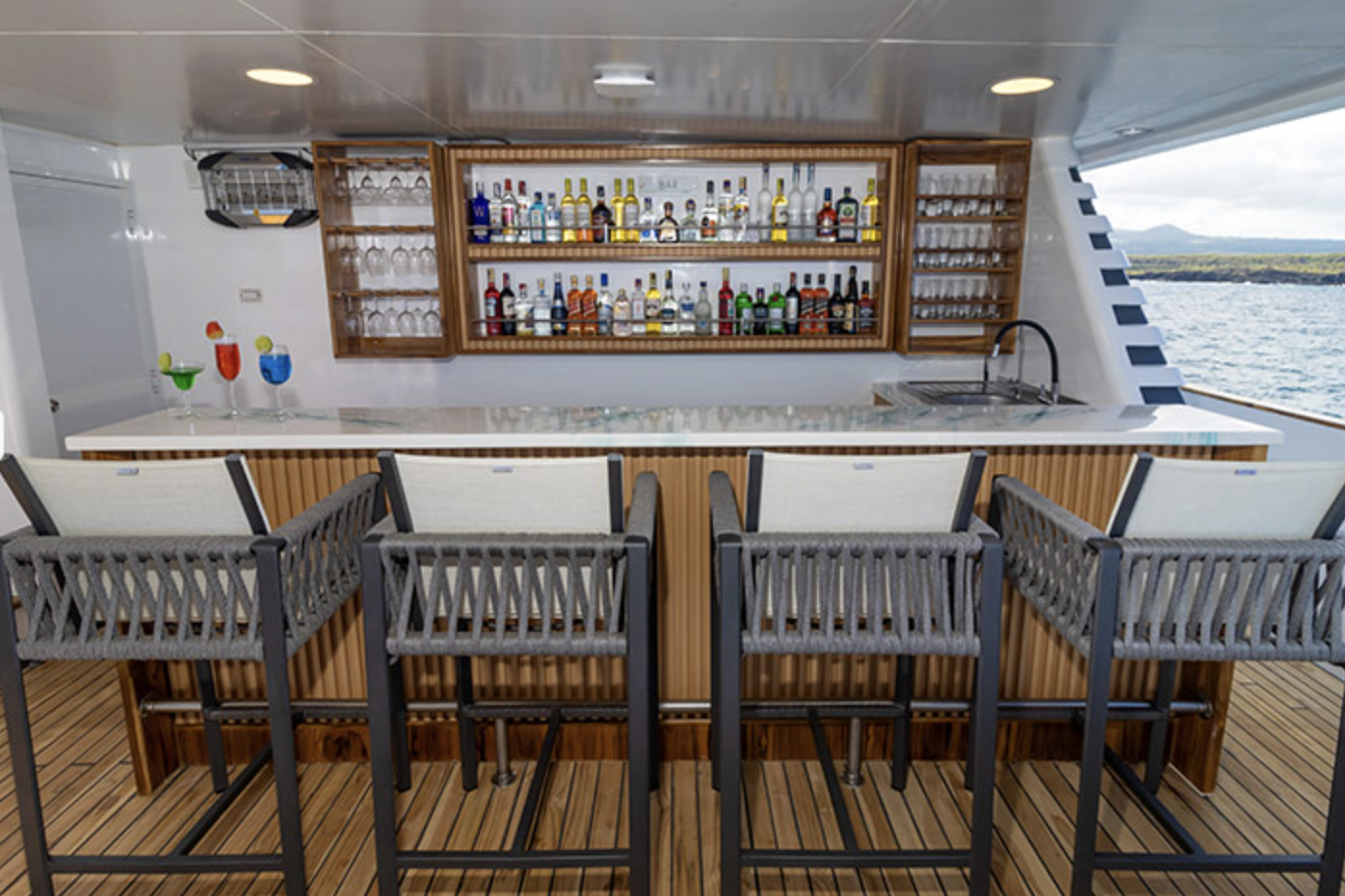
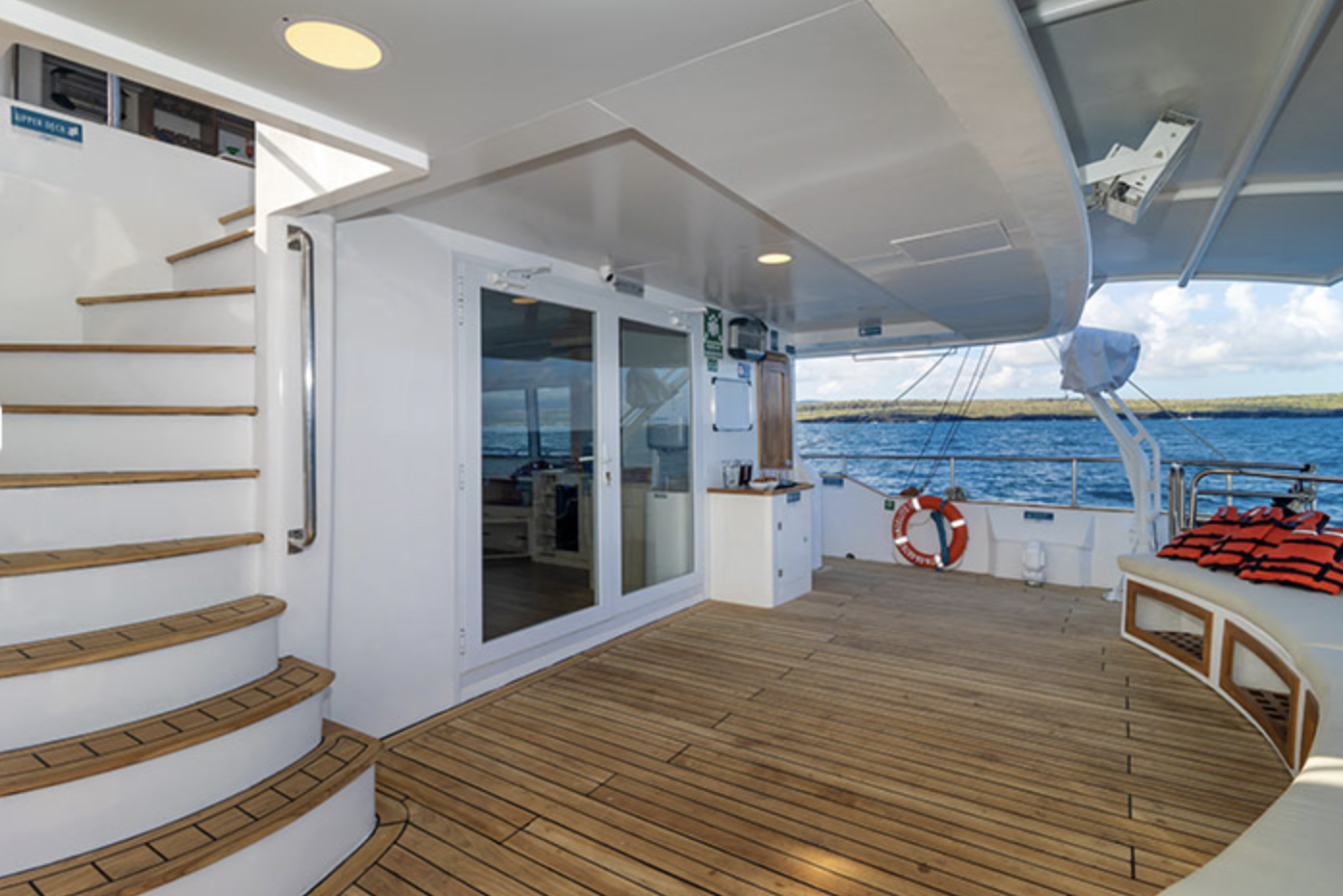
There is a spacious air-conditioned dining room with an excellent dining experience, a well-appointed lounge area and bar, plus many decks with outstanding platforms for photography. The sundeck has a jacuzzi and comfortable lounge chairs from which you can enjoy the relaxing sparkle of equatorial waters, discuss photography and natural history with our leaders and fellow travelers, as well as search for seabirds and whales.
2028 Galápagos: Moderate Activity Level: Luxury yacht, bus, and commercial aircraft transportation. Hiking on sandy beaches and rocky trails. Walks for up to two miles round-trip during a few landings. Transfer from boat to shore in zodiac type pangas. Optional snorkeling opportunities.
*Fee notes: CABIN FEES per person
Suite Upper Deck: $16,495
Twin Main Deck: $14,495
Single: $17,995
Luxurious cruising, with plenty of onshore time to explore the most photogenic wildlife locations in the Galápagos
Cruise in a comfortable and spacious vessel with just 14 photographers
Catamaran provides plenty of outside deck space for photography
Colorful boobies, gulls and frigatebirds in courtship display within a few feet of your camera
Snorkel with Galápagos penguins, sea lions and spectacular colorful fish
Trip includes all meals and shipboard lodging, hotel accommodation in Quito, round-trip internal flights, Galápagos National Park fees, photo guide and instruction
The Galápagos Islands are a must-see for any nature photographer. The trip with Van Os was outstanding in every way and provided incredible photo opportunities. —Peter B.
One of the best trips we’ve taken! Organization, guides, boat staff and itinerary exceeded our expectations!! —Linda C.
Luxurious cruising, with plenty of onshore time to explore the most photogenic wildlife locations in the Galápagos
Cruise in a comfortable and spacious vessel with just 14 photographers
Catamaran provides plenty of outside deck space for photography
Colorful boobies, gulls and frigatebirds in courtship display within a few feet of your camera
Snorkel with Galápagos penguins, sea lions and spectacular colorful fish
Trip includes all meals and shipboard lodging, hotel accommodation in Quito, round-trip internal flights, Galápagos National Park fees, photo guide and instruction
2028 Galápagos: Moderate Activity Level: Luxury yacht, bus, and commercial aircraft transportation. Hiking on sandy beaches and rocky trails. Walks for up to two miles round-trip during a few landings. Transfer from boat to shore in zodiac type pangas. Optional snorkeling opportunities.
*Fee notes: CABIN FEES per person
Suite Upper Deck: $16,495
Twin Main Deck: $14,495
Single: $17,995
Located on the equator, 600 miles west of mainland Ecuador, are Las Islas Encantadas—the Enchanted Islands. Better known as the Galápagos Archipelago, the Galápagos are a world apart—an untamed sanctuary where wildlife have evolved in isolation, producing species found nowhere else. In the absence of natural predators, animals here are astonishingly fearless, offering rare and intimate photographic opportunities. From volcanic landscapes shaped by fire to brilliant turquoise waters teeming with marine life, every island tells a story of adaptation and survival.
Our adventure begins in Quito, Ecuador, before flying to Baltra and setting sail to the Galápagos Islands. A large population of Magnificent Frigatebirds await us on North Seymour Island. During the breeding season, males inflate their brilliant red throat pouches in an elaborate display to attract mates. As we walk among the nesting sites, we watch Blue-footed Boobies performing their slow-motion courtship dance, lifting their sky-blue feet in exaggerated steps. Along the cliffs, swallow-tailed gulls perch at the edge, while below, sea lions haul themselves onto the rocky shore, joining marine iguanas who blend seamlessly into the dark, weathered stone.
We journey to the otherworldly lava fields of Sullivan Bay, with its billowing lava formations frozen in time from an eruption just two centuries earlier. Nearby Rábida Island glows with its iron-rich red sands and teems with life; Galápagos Hawks soar above and Brown Pelicans nest undisturbed along the shore. These islands, untouched by mainland predators, allow birds and reptiles to thrive in remarkable abundance. Santiago’s Puerto Egas offers striking black sand beaches, while Bartolomé Island boasts one of the most breathtaking views in the Galápagos—Pinnacle Rock rising from the sea. If we’re fortunate, we may witness sea turtles nesting beneath the stars. At Sombrero Chino, Galápagos Penguins dart through crystalline waters, while on Cerro Dragón, we might capture dream-like images of yellow land iguanas blending into a landscape of towering prickly pear cacti. A nearby hypersaline lagoon shimmers pink with red algae and reflections of flamingos wading through its shallows. Then we wander beneath Scalesia, or Giant Daisy Tree forests—a unique ecosystem found only in the Galápagos—as we ascend into the misty highlands of Santa Cruz Island.
The Galápagos is unlike anywhere else on Earth—an open-air museum of evolution, where each island reveals a new chapter in a story millions of years in the making, and where nature unfolds before your lens in vivid, unforgettable detail.
Galápagos Angel
The luxurious 115-foot Galápagos Angel offers the elegance and amenities to make your cruise a comfortable and unforgettable experience. Upper Deck Suite cabins have panoramic windows, king size bed with private bath. Main Deck cabins have twin or single bed options, panoramic windows with expansive ocean views with private bath. All cabins are air-conditioned. The yacht’s spacious cabins are much more akin to cabins on a cruise ship rather than the small cabins with upper and lower berths featured on most vessels operating in the Galápagos.
There is a spacious air-conditioned dining room with an excellent dining experience, a well-appointed lounge area and bar, plus many decks with outstanding platforms for photography. The sundeck has a jacuzzi and comfortable lounge chairs from which you can enjoy the relaxing sparkle of equatorial waters, discuss photography and natural history with our leaders and fellow travelers, as well as search for seabirds and whales.
Click to view larger image
Itinerary
Tour Itinerary
Day 1 Arrive Quito in the afternoon and transfer to our hotel. A group dinner is planned for this evening. (D)
Day 2 We fly to Baltra in the Galápagos, complete national park formalities and set off to sea aboard our comfortable yacht. You will be shown to your cabin where you will have some time to settle in before lunch and a welcome briefing. North Seymour is another uplifted island that is quite flat. The island is home to a large population of magnificent frigatebirds. We should see the frenzied displays of courting males, and the nest-building antics and thievery of their neighbors. In the open areas, blue-footed boobies perform their slow-motion courtship dance, and on the cliff edges elegant swallow-tailed gulls roost and loaf. Despite tremendous crashing surf on the outer shore, sea lions haul out onto the beach here and are joined by marine iguanas. Photography on North Seymour Island, with its low-flat profile and small forest of silvery Palo Santo trees. At this time of year, Magnificent Frigatebirds and Blue-footed Boobies engage in dazzling courtship displays and nest along the trail. Sea lions and marine iguanas share the rocky shoreline, while Swallow-tailed Gulls fly overhead. (BLD)
Day 3 After breakfast, we land on the rugged basalt shoreline of Sombrero Chino. This small islet is named for its distinctive shape. This is an excellent location to observe marine iguanas, Galápagos Penguins and Eagle Rays. The stunning landscape and crashing waves make for an exhilarating morning of landscape photography. We return to the boat for lunch. In the afternoon, we make a dry landing on Cerro Dragón, or Dragon Hill, named for its breeding colony of land iguanas that burrow into the rocky terrain. Here you can photograph the iguanas among the Opuntia cacti, which provide them with both food and moisture during the dry season. We walk to a hypersaline lagoon—saltier than the ocean—where we may spot American Flamingos, Black-necked Stilts, or White-cheeked Pintail Ducks. We might also see several species of endemic Darwin’s finches with their specialized bills, Galápagos Mockingbirds and other native birds. Before returning to the yacht for dinner and our nightly orientation, there will be time for an optional swim or snorkel. In the afternoon, we visit the surreal terrain of Sullivan Bay, where a dramatic eruption left behind a vast expanse of hardened lava. Striking formations of ropy lava and spatter cones comprise a graphic photographer’s dream landscape. We may also find an occasional shy Galápagos Penguin here, the world’s northernmost penguin species. Later in the day we travel to Rábida Island which lies at the center of the Galápagos archipelago. Here clusters of sea lions lounge on the red sand beachs. Brown Pelicans commonly nest at shoulder height in saltbushes along a nearby trail, which leads to a secluded saltwater lagoon. The island is a good location to see Blue-footed Boobies, Galápagos Doves and to search for endemic Galápagos Hawks, some of which may perch directly over our heads. (BLD)
Day 4 Genovesa Island is the summit of a partially submerged volcano and circular caldera which has been breached by the sea. Gentle slopes covered with sprawling Opuntia cacti and silvery palo santo trees rise 200 feet above the rugged shoreline. We go ashore at Darwin Bay to explore a coral-covered beach and tidal lagoons. This is the best spot in the islands to photograph great frigatebirds, yellow-crowned night herons and swallow-tailed gulls, as well as lava gulls. With a total population of just 400 pairs, the sooty-plumaged lava gull is the rarest gull in the world. In the afternoon we climb the spectacular cliffs of El Barranco, also known as Prince Phillip’s Steps, and hike through a path that leads up a high cliff rock face. This site is home to Palo Santo vegetation, and home to Nazca and red-footed boobies, Galápagos doves and mockingbirds. There are at least four kinds of Darwin’s finches and the possibility of finding the endemic race of the elusive short-eared owl. (BLD)
Day 5 Egas on Santiago Island reveals black sand beaches which were the site of a small salt mining industry in the 1960s. A hike in the area should provide an excellent opportunity to see finches, doves and hawks. Along the coast, basking marine iguanas, gaudy orange Sally Lightfoot crabs, and feeding American oystercatchers keep us busy until we reach a colony of Galápagos fur seals resting on the black lava rock at the end of our walk. Snorkeling is good in the waters near our landing beach. Rábida Island lies at the center of the Galápagos Archipelago. The reddish sand beach always has clusters of sea lions lounging and loafing in the surf and brown pelicans commonly nest at shoulder height in saltbushes close by. The island is a good location to search for Galápagos hawks, some of which may perch right over our heads. (BLD)
Day 6 At 490m above sea level, Cerro Mesa provides an impressive view of the archipelago. It is an excellent location to observe numerous endemic plants as well as up to 7 species of finch and the vermillion flycatcher. The area is characterized by a persistent drizzle (‘la garúa’) that falls horizontally throughout 8 months of the year. The west side features the largest crater on Santa Cruz. The Highlands of Santa Cruz are a deep green which contrast beautifully with the dry, lower part of the islands. We explore the lush scalesia forests of the Highlands—the favorite haunt of vermillion flycatchers—investigate volcanic craters and lava tubes and visit a tortoise reserve to photograph these charismatic animals in the wild. (BLD)
Day 7 Española Island is one of our favorite landing sites. The island is virtually the world's sole nesting grounds of 12,000 endemic waved albatrosses. When we arrive, the birds are in the peak of their courtship period. The island is also home to blue-footed boobies, Nazca boobies, swallow-tailed gulls, red-billed tropicbirds, Hood mockingbirds, sea lions, lava lizards and unusual (red) marine iguanas. Punta Suarez is an outstanding site for wildlife but also has a spectacular oceanside blowhole. When heavy swells are running, the spray shoots 30 yards into the air. It's hard to resist the antics of the lounging sea lion pups as they frolic in the shoreline surf, wrestle and play with each other, and pester their mothers at Gardner Bay. All of this is set against a backdrop of turquoise water and azure sky. (BLD)
Day 8 From a picturesque anchorage the land rises quickly to a high, rolling interior of eroded lava on Santa Fe Island. A variety of birds nest here, but of particular interest are Galápagos hawks, Galápagos mockingbirds and Galápagos doves. Here a colony of sea lions provides constant entertainment. A walk inland rewards us with attractive scenery and a cactus forest—and a photo opportunity with the large endemic Santa Fe land iguanas. We snorkel the island’s rocky shallows for their many fish and close underwater views of sea lions and, possibly, sea turtles. The Plaza Islands are flat, gently tilted, lava fault blocks uplifted from beneath the sea. Our visit is particularly interesting because of several hundred land iguanas that live there among the island’s giant cacti. Our landing beach is a whelping area for sea lions, and the steep wind-blown cliffs along the southern coast are one of the best locations in the islands to photograph flying red-billed tropicbirds with their elegant streaming tail feathers. (BLD)
Day 9 Returning to Santa Cruz Island, we visit Black Turtle Cove in the northern part of the island. This inlet is surrounded by mangroves and is only accessible by dinghy. The shallow cove is a haven for young marine life. Black-tip and white-tip reef sharks, sea turtles, and a variety of rays are often spotted here. After this final visit, we will transfer to the Baltra airport for our return to Quito. (BLD)
Day 10 Arrange for flights home at any time. (B)
Please Note Participants should allow for flexibility due to changes in weather, natural history events or other logistical arrangements deemed necessary by our leaders. Final determinations are subject to permits issued by the Galápagos National Park Service.
The Galápagos Islands are a must-see for any nature photographer. The trip with Van Os was outstanding in every way and provided incredible photo opportunities. —Peter B.
One of the best trips we’ve taken! Organization, guides, boat staff and itinerary exceeded our expectations!! —Linda C.
Located on the equator, 600 miles west of mainland Ecuador, are Las Islas Encantadas—the Enchanted Islands. Better known as the Galápagos Archipelago, the Galápagos are a world apart—an untamed sanctuary where wildlife have evolved in isolation, producing species found nowhere else. In the absence of natural predators, animals here are astonishingly fearless, offering rare and intimate photographic opportunities. From volcanic landscapes shaped by fire to brilliant turquoise waters teeming with marine life, every island tells a story of adaptation and survival.
Our adventure begins in Quito, Ecuador, before flying to Baltra and setting sail to the Galápagos Islands. A large population of Magnificent Frigatebirds await us on North Seymour Island. During the breeding season, males inflate their brilliant red throat pouches in an elaborate display to attract mates. As we walk among the nesting sites, we watch Blue-footed Boobies performing their slow-motion courtship dance, lifting their sky-blue feet in exaggerated steps. Along the cliffs, swallow-tailed gulls perch at the edge, while below, sea lions haul themselves onto the rocky shore, joining marine iguanas who blend seamlessly into the dark, weathered stone.
We journey to the otherworldly lava fields of Sullivan Bay, with its billowing lava formations frozen in time from an eruption just two centuries earlier. Nearby Rábida Island glows with its iron-rich red sands and teems with life; Galápagos Hawks soar above and Brown Pelicans nest undisturbed along the shore. These islands, untouched by mainland predators, allow birds and reptiles to thrive in remarkable abundance. Santiago’s Puerto Egas offers striking black sand beaches, while Bartolomé Island boasts one of the most breathtaking views in the Galápagos—Pinnacle Rock rising from the sea. If we’re fortunate, we may witness sea turtles nesting beneath the stars. At Sombrero Chino, Galápagos Penguins dart through crystalline waters, while on Cerro Dragón, we might capture dream-like images of yellow land iguanas blending into a landscape of towering prickly pear cacti. A nearby hypersaline lagoon shimmers pink with red algae and reflections of flamingos wading through its shallows. Then we wander beneath Scalesia, or Giant Daisy Tree forests—a unique ecosystem found only in the Galápagos—as we ascend into the misty highlands of Santa Cruz Island.
The Galápagos is unlike anywhere else on Earth—an open-air museum of evolution, where each island reveals a new chapter in a story millions of years in the making, and where nature unfolds before your lens in vivid, unforgettable detail.
Located on the equator, 600 miles west of mainland Ecuador, are Las Islas Encantadas—the Enchanted Islands. Better known as the Galápagos Archipelago, the Galápagos are a world apart—an untamed sanctuary where wildlife have evolved in isolation, producing species found nowhere else. In the absence of natural predators, animals here are astonishingly fearless, offering rare and intimate photographic opportunities. From volcanic landscapes shaped by fire to brilliant turquoise waters teeming with marine life, every island tells a story of adaptation and survival.
Our adventure begins in Quito, Ecuador, before flying to Baltra and setting sail to the Galápagos Islands. A large population of Magnificent Frigatebirds await us on North Seymour Island. During the breeding season, males inflate their brilliant red throat pouches in an elaborate display to attract mates. As we walk among the nesting sites, we watch Blue-footed Boobies performing their slow-motion courtship dance, lifting their sky-blue feet in exaggerated steps. Along the cliffs, swallow-tailed gulls perch at the edge, while below, sea lions haul themselves onto the rocky shore, joining marine iguanas who blend seamlessly into the dark, weathered stone.
We journey to the otherworldly lava fields of Sullivan Bay, with its billowing lava formations frozen in time from an eruption just two centuries earlier. Nearby Rábida Island glows with its iron-rich red sands and teems with life; Galápagos Hawks soar above and Brown Pelicans nest undisturbed along the shore. These islands, untouched by mainland predators, allow birds and reptiles to thrive in remarkable abundance. Santiago’s Puerto Egas offers striking black sand beaches, while Bartolomé Island boasts one of the most breathtaking views in the Galápagos—Pinnacle Rock rising from the sea. If we’re fortunate, we may witness sea turtles nesting beneath the stars. At Sombrero Chino, Galápagos Penguins dart through crystalline waters, while on Cerro Dragón, we might capture dream-like images of yellow land iguanas blending into a landscape of towering prickly pear cacti. A nearby hypersaline lagoon shimmers pink with red algae and reflections of flamingos wading through its shallows. Then we wander beneath Scalesia, or Giant Daisy Tree forests—a unique ecosystem found only in the Galápagos—as we ascend into the misty highlands of Santa Cruz Island.
The Galápagos is unlike anywhere else on Earth—an open-air museum of evolution, where each island reveals a new chapter in a story millions of years in the making, and where nature unfolds before your lens in vivid, unforgettable detail.
Located on the equator, 600 miles west of mainland Ecuador, are Las Islas Encantadas—the Enchanted Islands. Better known as the Galápagos Archipelago, the Galápagos are a world apart—an untamed sanctuary where wildlife have evolved in isolation, producing species found nowhere else. In the absence of natural predators, animals here are astonishingly fearless, offering rare and intimate photographic opportunities. From volcanic landscapes shaped by fire to brilliant turquoise waters teeming with marine life, every island tells a story of adaptation and survival.
Our adventure begins in Quito, Ecuador, before flying to Baltra and setting sail to the Galápagos Islands. A large population of Magnificent Frigatebirds await us on North Seymour Island. During the breeding season, males inflate their brilliant red throat pouches in an elaborate display to attract mates. As we walk among the nesting sites, we watch Blue-footed Boobies performing their slow-motion courtship dance, lifting their sky-blue feet in exaggerated steps. Along the cliffs, swallow-tailed gulls perch at the edge, while below, sea lions haul themselves onto the rocky shore, joining marine iguanas who blend seamlessly into the dark, weathered stone.
We journey to the otherworldly lava fields of Sullivan Bay, with its billowing lava formations frozen in time from an eruption just two centuries earlier. Nearby Rábida Island glows with its iron-rich red sands and teems with life; Galápagos Hawks soar above and Brown Pelicans nest undisturbed along the shore. These islands, untouched by mainland predators, allow birds and reptiles to thrive in remarkable abundance. Santiago’s Puerto Egas offers striking black sand beaches, while Bartolomé Island boasts one of the most breathtaking views in the Galápagos—Pinnacle Rock rising from the sea. If we’re fortunate, we may witness sea turtles nesting beneath the stars. At Sombrero Chino, Galápagos Penguins dart through crystalline waters, while on Cerro Dragón, we might capture dream-like images of yellow land iguanas blending into a landscape of towering prickly pear cacti. A nearby hypersaline lagoon shimmers pink with red algae and reflections of flamingos wading through its shallows. Then we wander beneath Scalesia, or Giant Daisy Tree forests—a unique ecosystem found only in the Galápagos—as we ascend into the misty highlands of Santa Cruz Island.
The Galápagos is unlike anywhere else on Earth—an open-air museum of evolution, where each island reveals a new chapter in a story millions of years in the making, and where nature unfolds before your lens in vivid, unforgettable detail.
Get Your Free Ebook A Guide To Organizing And Finding Your Images By John Shaw
Van Os Photo Safaris uses the information you provide to contact you about our upcoming tours, special offers, and trip reports. You may unsubscribe from these communications at any time. For more information, check out our Privacy Policy.
Get Your Free Ebook Panorama by John Shaw
Van Os Photo Safaris uses the information you provide to contact you about our upcoming tours, special offers, and trip reports. You may unsubscribe from these communications at any time. For more information, check out our Privacy Policy.